Value Chain Support

2026
Damascus, Syria
strategic foundation & concept
Branding humanitarian and post-conflict economic recovery programs presents a distinct visual challenge: synthesizing broad multi-sector objectives into a clear, unified symbol. Implemented by the Syrian Enterprise & Business Centre (SEBC) in partnership with UNOPS under the Nexus Response Mechanism, the VCSS initiative required an identity rooted in geographic and structural purpose. The visual strategy relies on the rule of three, reflecting the project’s core pillars: three operational zones (az-Zabadani, Anadan, and Haritan) and three intervention tracks (economic recovery, private sector competitiveness, and ESG embedding). Overlaying these triads onto a geometric vector matrix of Syria's national outline established the project’s primary concept—a structural map representing economic resilience across key regional corridors.
vcss01-inspiration
vcss02-abstraction
geographic abstraction
To avoid literal cartographic cliches while maintaining territorial relevance, the geographic silhouette of Syria underwent systemic geometric abstraction. By deconstructing the map into a directional triangular grid, the regional topography was translated into dynamic diagonal vectors. This process isolated the primary southwest-to-northeast axis, transforming geographic boundaries into functional movement lines. The resulting dynamic angle forms the foundation of the emblem, symbolizing forward momentum, cross-regional value chains, and structured economic progression across fragile post-conflict environments.
design grid & structural precision
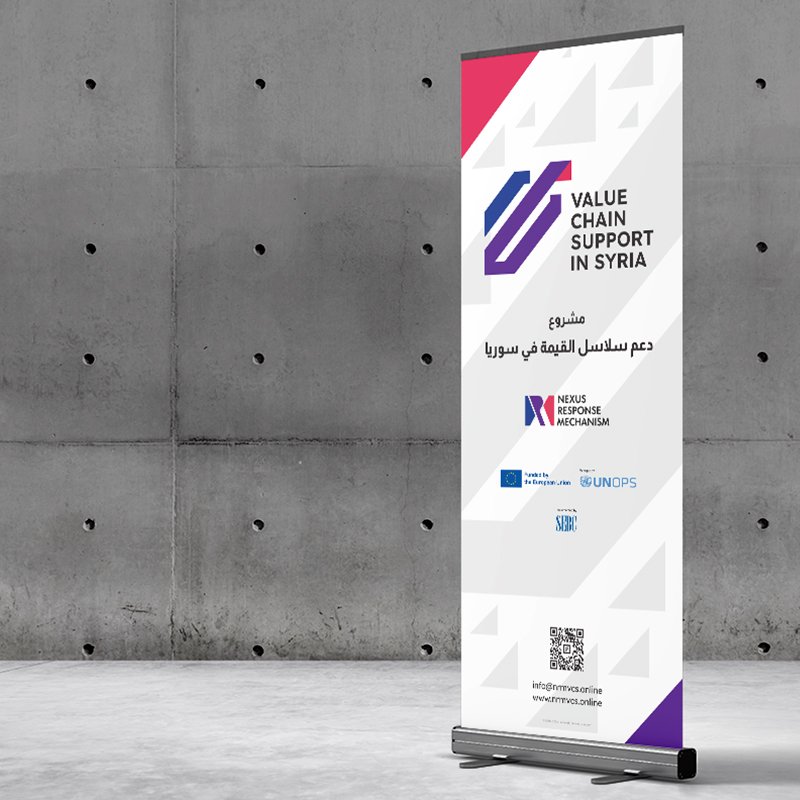
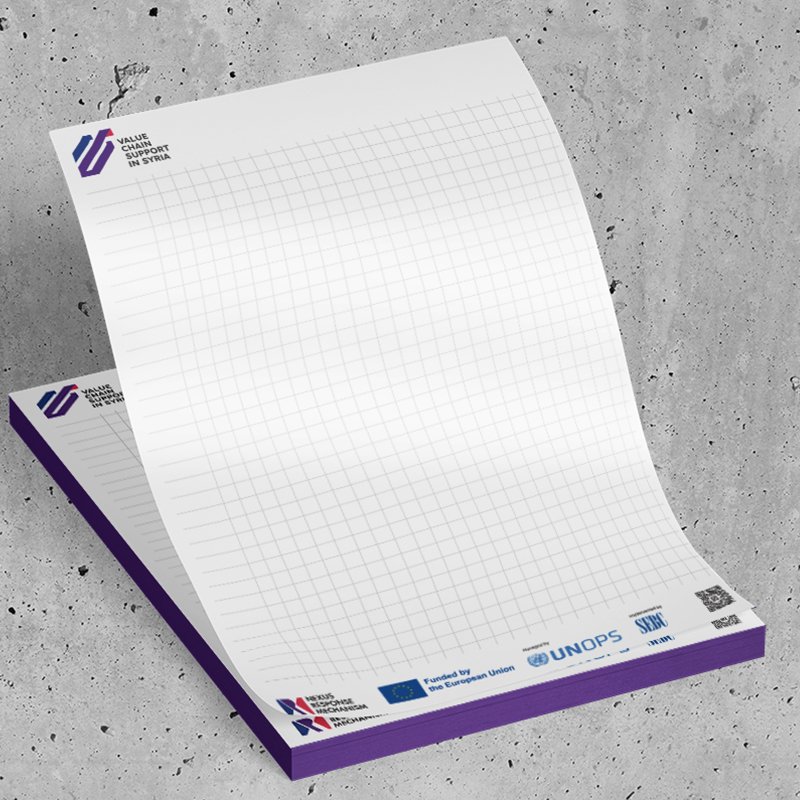
The construction phase utilized an isometric triangular grid to draft the mark's precise mechanical ratios. This geometric framework ensures optical balance and strict mathematical alignment across all vector elements. The mark is constructed from three distinct parallel diagonal bands that interlock to form an abstract "V" and "C" monogram. By aligning the cut angles at strict 45-degree and 60-degree increments, the grid guarantees structural integrity. This disciplined approach ensures the emblem scales seamlessly across institutional applications—from small digital footers to large-scale field signage and donor compliance documentation.
vcss03-grid
vcss04-logo
final mark & institutional typography
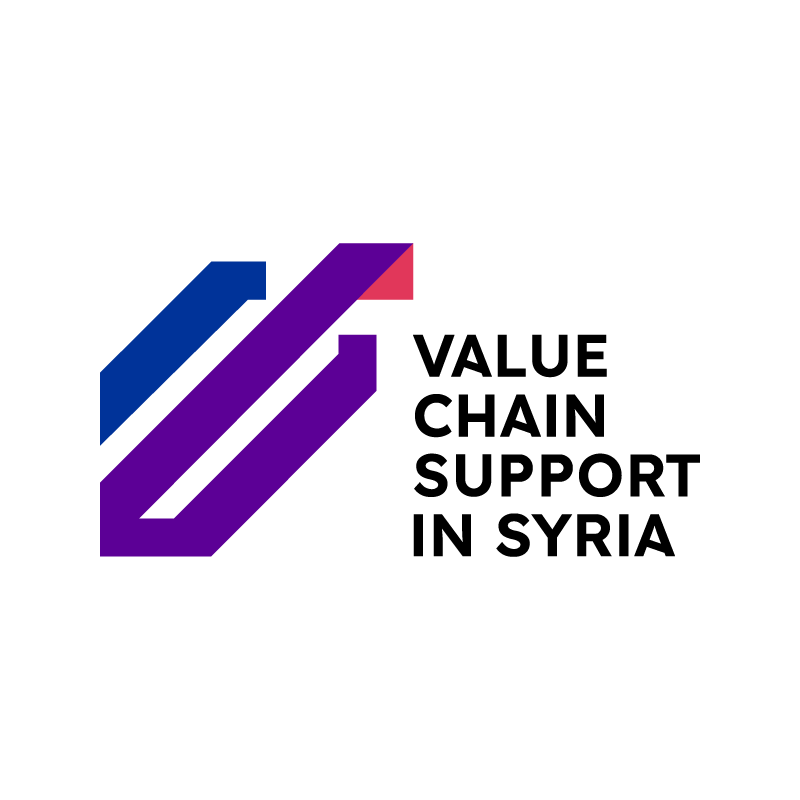
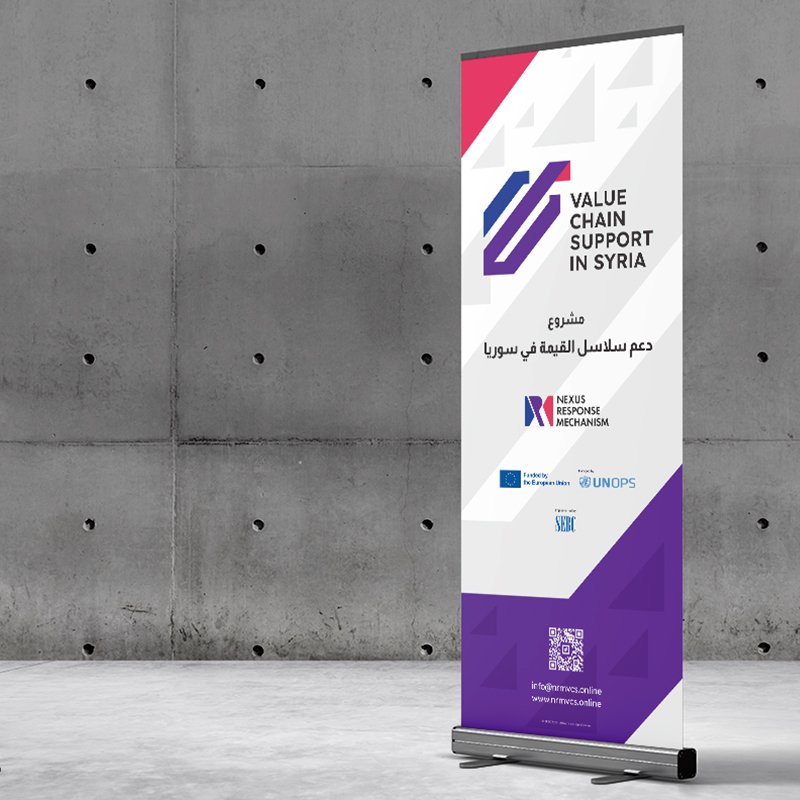
The finalized mark features sharp, geometric edges that convey institutional stability, transparency, and operational rigor. The interlocking linear bands visually represent the value chain concept—connecting local production to broader market opportunities. Accompanying the mark is a solid, highly legible geometric sans-serif logotype stacked in four clean lines. The typographic hierarchy balances the visual weight of the emblem, delivering a clear, authoritative presence suitable for multi-stakeholder communication across international development partners, local communities, and private-sector beneficiaries.

programmatic palette alignment
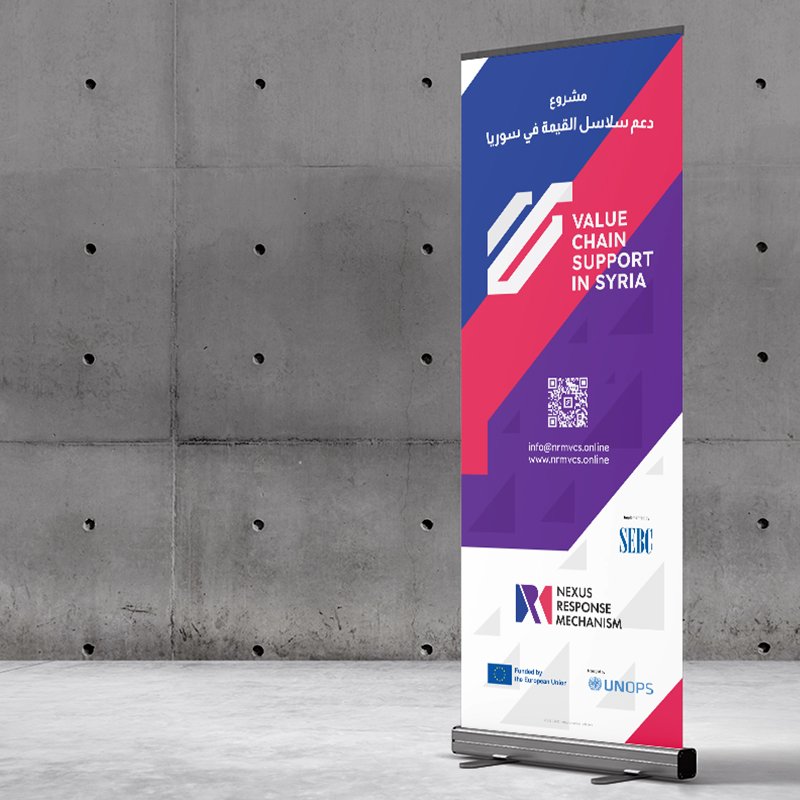
To establish clear visual lineage within the broader institutional framework, the color system directly adopts the Nexus Response Mechanism (NRM) parent palette. Deep royal blue serves as the foundational anchor, instilling institutional trust, governance, and stability. Rich purple acts as a transitional bridge to a vibrant magenta-red accent, creating a high-contrast palette that signifies active recovery and growth. This color alignment maintains seamless brand hierarchy across European Union and UNOPS visibility standards while giving the VCSS sub-grantee program its own distinct visual identity.
vcss05-colors
vcss06-website
digital infrastructure & deployment
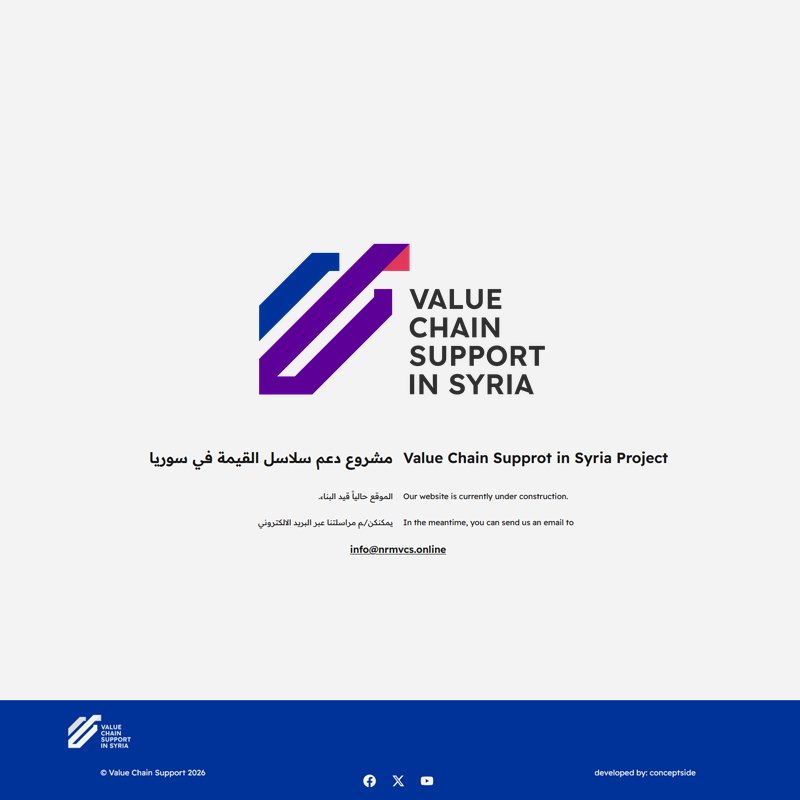
The digital presence at www.nrmvcs.online establishes an immediate institutional landing point while full platform capabilities are being finalized. Designed to support multi-stakeholder engagement and transparency, the future web architecture will function as a dynamic directory. The platform will enable cross-field filtering across operational sectors, activity zones, and beneficiary resources—extending the project's visual clarity into an accessible digital tool for community engagement and knowledge sharing.

Value Chain Support

2026
Damascus, Syria
strategic foundation & concept
Branding humanitarian and post-conflict economic recovery programs presents a distinct visual challenge: synthesizing broad multi-sector objectives into a clear, unified symbol. Implemented by the Syrian Enterprise & Business Centre (SEBC) in partnership with UNOPS under the Nexus Response Mechanism, the VCSS initiative required an identity rooted in geographic and structural purpose. The visual strategy relies on the rule of three, reflecting the project’s core pillars: three operational zones (az-Zabadani, Anadan, and Haritan) and three intervention tracks (economic recovery, private sector competitiveness, and ESG embedding). Overlaying these triads onto a geometric vector matrix of Syria's national outline established the project’s primary concept—a structural map representing economic resilience across key regional corridors.
vcss01-inspiration
geographic abstraction
To avoid literal cartographic cliches while maintaining territorial relevance, the geographic silhouette of Syria underwent systemic geometric abstraction. By deconstructing the map into a directional triangular grid, the regional topography was translated into dynamic diagonal vectors. This process isolated the primary southwest-to-northeast axis, transforming geographic boundaries into functional movement lines. The resulting dynamic angle forms the foundation of the emblem, symbolizing forward momentum, cross-regional value chains, and structured economic progression across fragile post-conflict environments.
vcss02-abstraction
design grid & structural precision
The construction phase utilized an isometric triangular grid to draft the mark's precise mechanical ratios. This geometric framework ensures optical balance and strict mathematical alignment across all vector elements. The mark is constructed from three distinct parallel diagonal bands that interlock to form an abstract "V" and "C" monogram. By aligning the cut angles at strict 45-degree and 60-degree increments, the grid guarantees structural integrity. This disciplined approach ensures the emblem scales seamlessly across institutional applications—from small digital footers to large-scale field signage and donor compliance documentation.
vcss03-grid
final mark & institutional typography
The finalized mark features sharp, geometric edges that convey institutional stability, transparency, and operational rigor. The interlocking linear bands visually represent the value chain concept—connecting local production to broader market opportunities. Accompanying the mark is a solid, highly legible geometric sans-serif logotype stacked in four clean lines. The typographic hierarchy balances the visual weight of the emblem, delivering a clear, authoritative presence suitable for multi-stakeholder communication across international development partners, local communities, and private-sector beneficiaries.

vcss04-logo
programmatic palette alignment
To establish clear visual lineage within the broader institutional framework, the color system directly adopts the Nexus Response Mechanism (NRM) parent palette. Deep royal blue serves as the foundational anchor, instilling institutional trust, governance, and stability. Rich purple acts as a transitional bridge to a vibrant magenta-red accent, creating a high-contrast palette that signifies active recovery and growth. This color alignment maintains seamless brand hierarchy across European Union and UNOPS visibility standards while giving the VCSS sub-grantee program its own distinct visual identity.
vcss05-colors
digital infrastructure & deployment
The digital presence at www.nrmvcs.online establishes an immediate institutional landing point while full platform capabilities are being finalized. Designed to support multi-stakeholder engagement and transparency, the future web architecture will function as a dynamic directory. The platform will enable cross-field filtering across operational sectors, activity zones, and beneficiary resources—extending the project's visual clarity into an accessible digital tool for community engagement and knowledge sharing.
vcss06-website

more insights about Value Chain Support

more insights about Value Chain Support